
The Most Fascinating Facts About Cables and Wires
20.09.2024

Cables and wires are things without which it is hard to imagine modern life. They permeate virtually every aspect of human activity — from household appliances and computers to industry and space exploration. Yet few people stop to think about the unique types of cables and wires that exist in the world. In this article, we share some amazing facts from the history and development of these vital products.
The Longest Cables
Submarine cables laid along the ocean and sea floors connect continents. Without them, the global communication we rely on daily would be impossible. One of the longest such cables stretches between Eemshaven in the Netherlands and Feda in Norway. Its length is 580 km! This cable, known as NorNed, is capable of transmitting up to 700 MW of power.
NorNed consists of six continuous segments — each up to 154 km long when using a single conductor core, and up to 75 km with dual cores. Its construction is complex: multi-stranded copper conductors, paper insulation impregnated with a special compound, and protective layers of metallized paper and lead. Despite its length, NorNed remains the longest high-voltage submarine cable in the world.
Another record holder is a superconducting power cable created by South Korea’s LS Cable company. It can transmit electricity over a distance of 1.5 km with virtually no losses. Unlike regular cables, superconducting ones are cooled with liquid nitrogen, which enables ultra-low electrical resistance. The use of such cables greatly increases the efficiency of power grids.
The Thickest Cables
The thickest cable ever made is a three-core submarine cable produced by German company nkt cables. Its diameter is a whopping 27 cm! Such thickness is necessary to handle voltages over 240 kV. The cable spans 24 km, connecting an offshore power plant to a transformer station onshore. Due to its immense weight, the cable had to be laid in separate segments.
The Lightest Cables
On the opposite end of the scale, the lightest cable is the RK50-3.7-41 space cable, created for the Mir space station. It weighs only 40.3 grams per meter. This was achieved through the use of high-tech, lightweight materials. The RK50 cable can withstand an extreme temperature range — from -200 to +200 degrees Celsius, which is essential for operation in outer space. It also offers minimal signal loss.
The Thinnest Wires
The thinnest wire on record was created in the SLAC laboratory (USA). Its width is only 728 picometers — approximately six copper atomic radii in diameter. It was made by placing copper atoms inside carbon nanotubes called diamondoids. The resulting nanostructure has exceptional strength and conductivity. In the future, such ultra-thin wires may be used in nanoelectronics.
The Strongest Cable
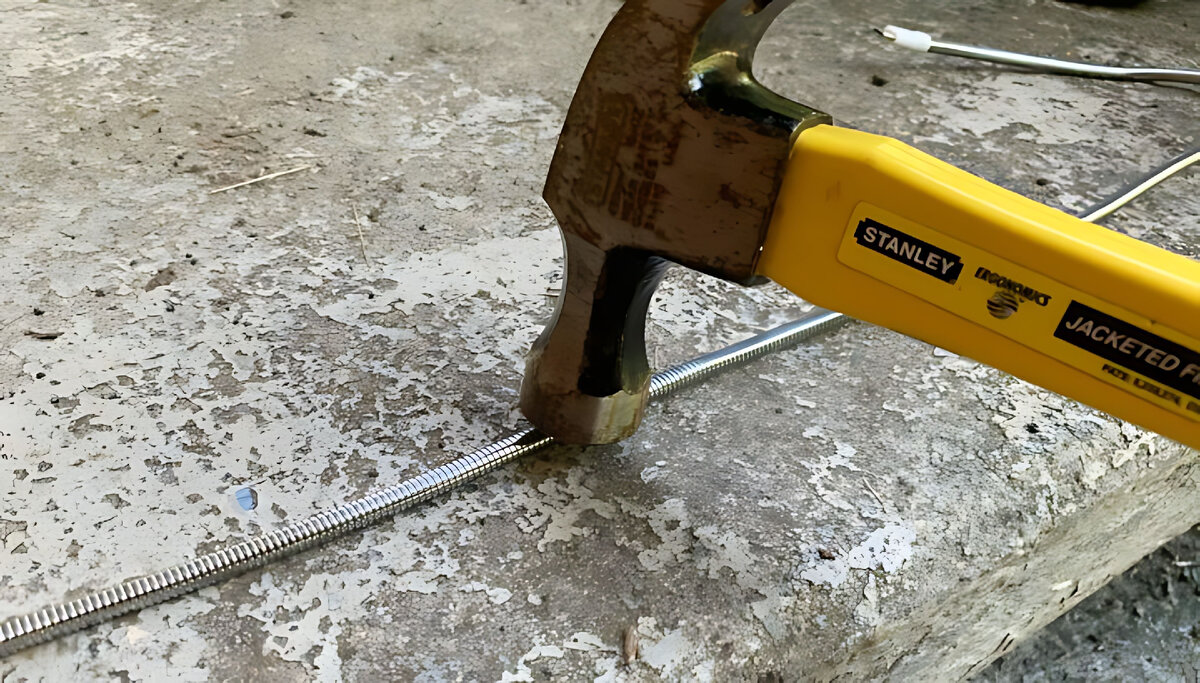
The company Fuse Chicken developed an incredibly strong cable called Titan. It’s designed for charging and syncing iOS mobile devices. The Titan cable features a dual-layer steel wire braid, making it practically indestructible.
According to tests, Titan can withstand being run over by a car, chewed by animals, twisted, and stretched. The manufacturer offers a lifetime warranty. Thanks to its durability, Titan can serve for decades, saving users the cost of constantly replacing broken cords.
The Most Expensive Cables

Since we’ve mentioned durability, it’s worth talking about the world’s most expensive cables. For example, the company Wireworld produces a premium HDMI cable called Platinum Starlight 7. One meter of this cable costs $1,000! Its construction includes 24 silver conductors.
Another luxury product is a 12-meter reference Ethernet cable by Transparent, costing $10,000. It also uses silver for its contacts and conductors. According to the manufacturer, this design is optimized for transmitting the highest quality audio signals.
Funny Incidents
Sometimes cables fall victim to unusual mishaps. In 2013, a shark bit through a submarine fiber-optic cable in Egypt, cutting off internet access for a large part of the country. The damage had to be urgently repaired at a depth of about one meter.
In Australia, cable breakages frequently occur because local termites feed on them, chewing through the insulation. To combat this, operators resort to wrapping cables in sand, burying them deeper underground, or using repellents.
Conclusion
As you can see, even ordinary-looking cables and wires can possess unique properties and characteristics. Some of them play crucial roles in the infrastructure of our civilization. And sometimes, cables become the targets of amusing incidents. We've shared just a few of the most interesting facts from the world of cable technology. And there’s still so much more fascinating to discover in this field!