
Which Cable is Best for Apartment Wiring?
03.10.2024
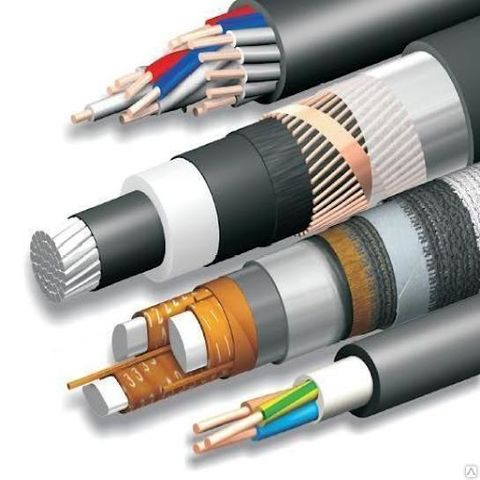
Which Cable is Best for Apartment Wiring: Brands, Cross-Sections, and Selection
A major apartment renovation always involves replacing the electrical wiring. There are two main reasons for this.
First — the age of the existing wiring. Typically, major or significant renovations are carried out 15–20 years after the apartment is handed over. During this time, even a well-installed electrical system ages and wears out. This means it can potentially become a hazard for the residents.
Second — remodeling and significant renovation of individual rooms with the addition of new electrical appliances. Connecting new wiring to the old is highly undesirable due to the potential mismatch in cable characteristics or materials.
So, the question of whether to replace the wiring is already answered — yes. Now, it’s time to figure out how to do it, starting with cable selection.
Apartment Wiring Cable — 300 Brands and 5,000 Types
Where to begin? A person unfamiliar with electrical work might throw up their hands. And it’s understandable. There are not just many cables — there are thousands of them, like Don Pedros in Brazil. Even professional electricians sometimes get overwhelmed by the variety of manufacturers and products.
Choosing the right cable isn’t just about the cost of the renovation. Much more important is that the wiring must reliably deliver electricity to every corner of the apartment and be safe — no risk of electric shocks, plus it should be fire-resistant and durable.
⚠️ Important! The most critical element of a safe electrical installation is a competent electrician. Cable selection and installation must be handled by a qualified professional with proper certification and experience.
We’ll briefly cover the key aspects: cable types, cross-sections, labeling, materials, and which types are suitable (or not) for home use. This will help you understand what your electrician is doing and why.
Key Characteristics to Consider When Choosing a Cable
Note: We’re discussing household power cables (220/380 V) for residential electrical systems. We’re not covering other types like heating cables, TV, computer, etc.
1. Conductor Material and Construction
Cables are either copper or aluminum. Copper is more reliable, has lower resistance, carries more current, and heats up less than aluminum of the same cross-section. Copper also oxidizes less and is more flexible, resulting in longer service life without degradation.
⚠️ Important! Using aluminum cable for in-apartment wiring is prohibited according to the Electrical Installation Code (PUE).

Cables come as single-core (solid) and multi-core (stranded). Solid-core cables are more rigid, especially with larger diameters.
Technically, a solid-core copper cable under plaster is acceptable. Plaster provides additional protection. However, in practice, no one uses solid wire for in-wall residential wiring.

Instead, single-core cables made of a single copper wire per core are used. They’re flexible enough for concealed or surface installation. A three-core solid copper cable is the most commonly used type in apartments today.
⚠️ Caution: Do not confuse single-wire per conductor cables with cables where each conductor is made of multiple fine wires. The latter (stranded multi-wire conductors) are prohibited for permanent home installation due to fire risk. More on that in the section “Cables You Shouldn’t Use for Apartment Wiring.”

2. Cable Cross-Section
Measured in square millimeters (mm²), indicating how much current the cable can carry. A copper cable with a 1 mm² cross-section typically carries 8–10 amps. Aluminum — only about 5 A. Always choose a cable with extra capacity to avoid overheating and melting insulation.
⚠️ Note: Cross-section is not the same as diameter! Measure the diameter with calipers, plug it into the area formula, and calculate the cross-section.

Always round up. If the calculated size is 2.3 mm², choose 2.5 mm² — not 2 mm².
Actual cross-sections often differ slightly from the labeled size, as cables are certified by electrical resistance, not geometric cross-section. Minor differences are allowed. Large discrepancies indicate poor quality or fakes.
Some electricians suggest oversizing to compensate for underspec cables — e.g., using 4 mm² instead of 2.5 mm². But then you must adjust circuit breakers and RCDs accordingly.
✅ Recommendation:
Use 1.5 mm² copper for lighting circuits and 2.5 mm² copper for outlets.
3. Insulation Thickness
Each conductor is insulated with PVC or polyethylene. For domestic cables up to 660 V and cross-sections of 1.5 or 2.5 mm², the insulation must be 0.6 mm thick (minimum allowed: 0.44 mm). This ensures safety and durability.
It’s hard to check insulation thickness without a micrometer. That’s why it’s best to buy from reputable stores and choose trusted brands.
4. Sheath Thickness
The outer sheath protects and holds the conductors together. Like insulation, it’s made from PVC or polymers, but thicker. Standard thickness:
- 1.8 mm for multi-core
- 1.4 mm for single-core
Slight variations are acceptable.
Double insulation (conductor + outer sheath) is mandatory for residential wiring. It protects both people and cables.
5. Marking
All essential cable information should be clearly printed on the sheath — legible and durable.
Marking includes:
- Cable type (code)
- Manufacturer name
- Year of production
- Number of conductors
- Cross-section
- Voltage rating
In stores or catalogs, you’ll often see abbreviated labels like VVGng(ozh)-0.66kV 3x1.5 or simply VVG, VVGng 3x1.5.
Example decoding:
A three-core copper cable with 1.5 mm² conductors, solid-core (ozh), PVC insulation and sheath (VV), flexible (G), non-flammable (ng), rated for 660 V.
ℹ️ Tip:
If the first letter of the marking is A, it means aluminum. No letter = copper. So, VVG cables are always copper.
6. Conductor Color Coding
Colors should be solid or have longitudinal stripes — not random smudges or cross lines. Anything nonstandard is a red flag for counterfeit cable.
Standard color coding:
- Yellow-green — ground (protective)
- Blue — neutral
- Brown / black / red — phase (live)

7. Packaging
Cables come in coils (bales) or spools. Every package must include a label tag, detailing:
- Manufacturer or trademark
- Cable type
- Standard (GOST/TU)
- Production date
- Number and length of segments
- Spool number
- Weight
- Certification marks
- Quality control stamp (OTK)
If you buy a full coil (e.g., 100 m), you’ll get the tag. For cut lengths, you can inspect the tag but usually don’t get it.
8. Certification
Two certificates are standard:
- Conformity Certificate — verifies cable as an electrical product
- Fire Safety Certificate — ensures it meets fire protection standards
You can (and should) request these from the seller. Make sure they list current standards (GOST) and are valid.
9. Condition
Always inspect cable appearance. Dents, sharp bends, or flattening may hide broken or shorted conductors. Never install a damaged cable.
Which Cable Do You Need for Apartment Wiring?
You need two standard copper cable sizes for an apartment:
- 2.5 mm² — for outlets, as they may power loads up to 3–4 kW. This cable is rated up to 5.9 kW and 27 A. Always allow a margin — don’t run cables near their limits, especially when embedded in walls where cooling is reduced.
- 1.5 mm² — for lighting circuits, where the load is significantly lower. Even elaborate lighting setups won’t exceed the capacity.
⚠️ Important: Modern safety rules require grounding for all home appliances and special grounded outlets. So use a three-core cable: phase, neutral, and ground.